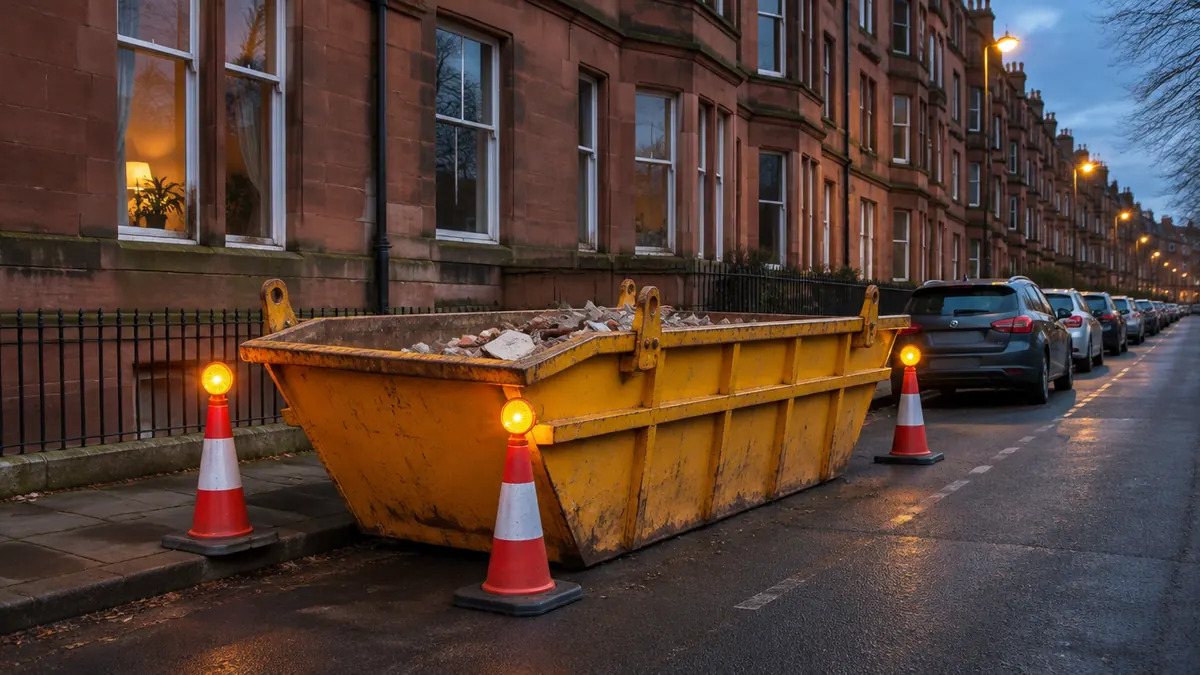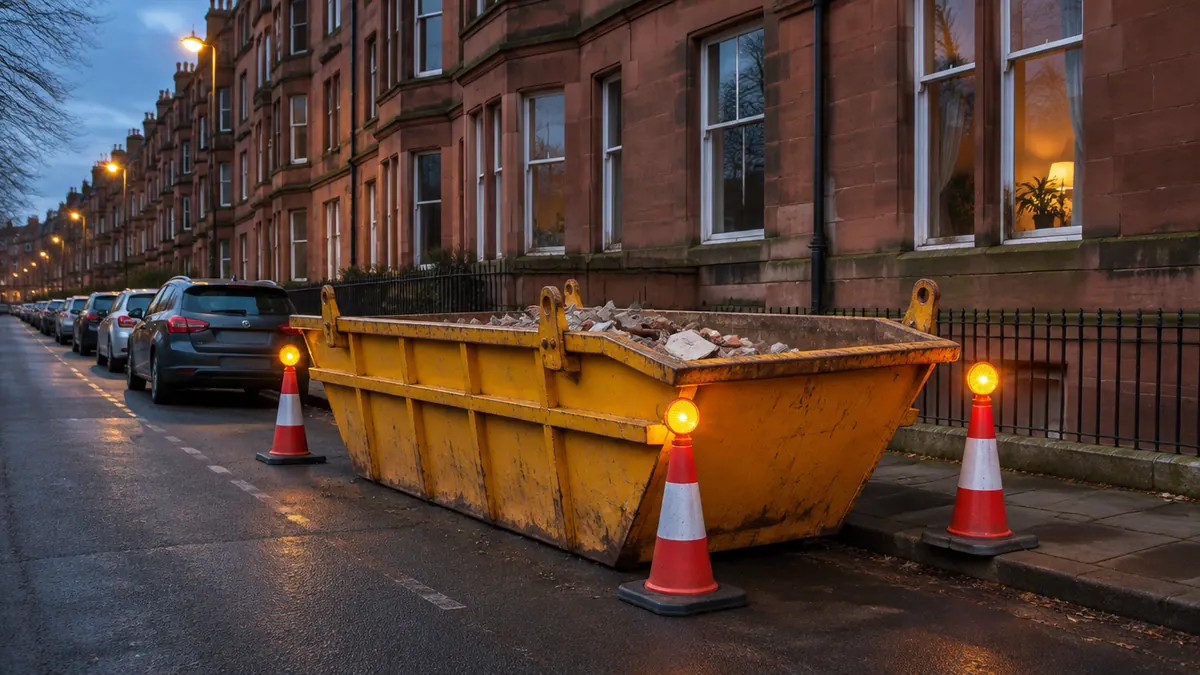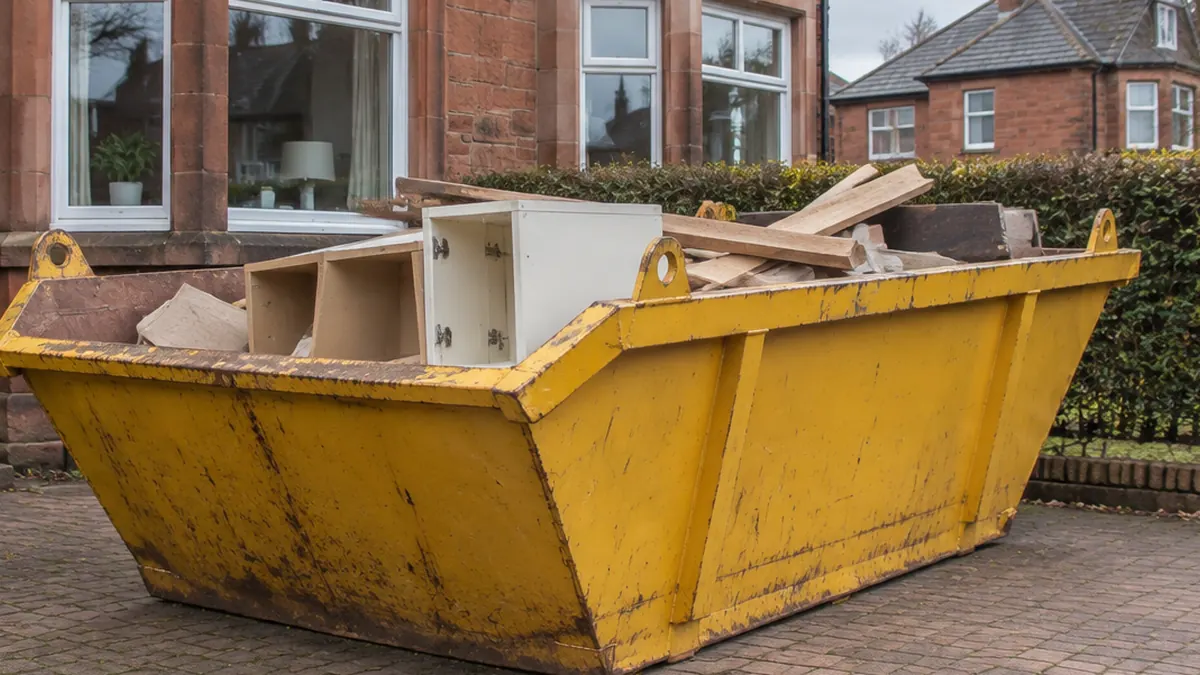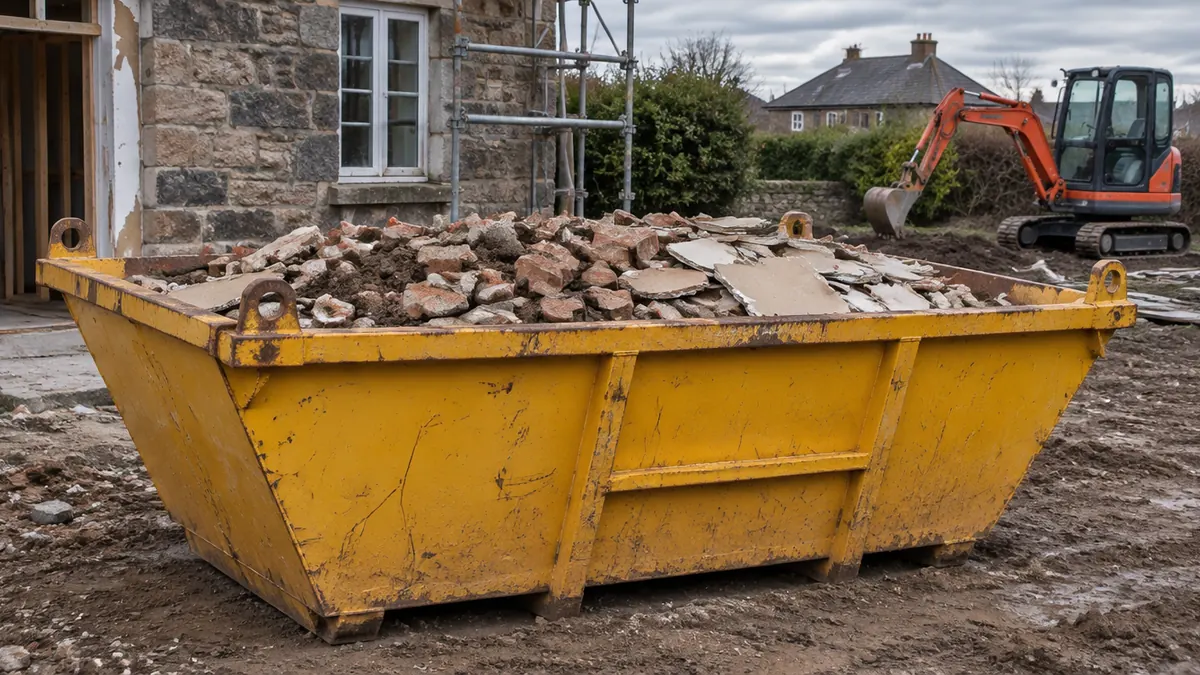
An 8 yard builders skip looks huge when it arrives on your driveway, and it is tempting to think you can fill it to the brim with soil from a garden dig or rubble from a knocked down wall. Unfortunately, heavy materials do not work that way. With soil and rubble, weight runs out long before space does.
Here is what you need to know before you start shovelling.
Why soil and rubble are different
Most household waste is bulky but light. Old furniture frames, packaging, timber and carpets take up a lot of room without weighing very much. Soil, clay, stone, concrete, brick and hardcore are the opposite. They are dense, and a small volume can weigh a great deal.
A single cubic yard of soil can weigh well over a tonne, especially if it is wet clay, which is common across Glasgow and Renfrewshire. Rubble and concrete can be heavier still. Multiply that by 8 cubic yards and a full builders skip of soil would weigh far more than a skip lorry can legally and safely lift.
So how much can go in?
As a general rule, an 8 yard skip used for heavy materials should only be filled part of the way. For soil and rubble, around half full is a sensible guide, but the exact amount depends on the material, how wet it is and how tightly it is packed. Our team will tell you the safe level for your job when you book.
If you fill a skip with heavy waste beyond the safe level, the driver may not be able to lift it. That can mean having to remove some of the waste by hand before collection, or paying for an extra visit.
Better options for heavy waste
For jobs that create a lot of soil or rubble, there are often better choices than an 8 yard builders skip:
- A smaller skip filled to the top. Our 2 and 4 yard skips are designed so that a full load of heavy material stays within a safe weight. Two smaller skips can work out more efficient than one large skip only half filled.
- A 20 yard roll on roll off skip. For bigger excavation or demolition jobs, our 20 yard roll on roll off skips are suitable for heavy materials such as soil and brick.
- Tipper hire. We operate a large fleet of modern wagons. For large quantities of soil or hardcore from groundworks, a tipper can be quicker and more cost effective than a skip.
Keep heavy waste clean
If you can, keep soil, rubble and concrete separate from general mixed waste. Clean loads of inert material are easier to recycle, and much of it can be crushed and reused as aggregate or used in land restoration. Mixing soil with plastics, timber and plasterboard makes it harder to process.
Always tell us if your soil might be contaminated, for example with oil, chemicals or Japanese knotweed. These materials need specialist handling and cannot go in a standard skip.
Loading tips for heavy materials
- Spread the weight evenly across the base of the skip rather than piling it at one end.
- Load heavy materials first, then add any lighter waste on top.
- Keep the load below the top edge. Even with heavy waste, nothing should sit above the rim.
- Do not add water. Hosing down dusty rubble adds weight quickly.
Talk to us before you dig
The best way to avoid an overweight skip is to tell us about your job in advance. Let us know roughly how much soil or rubble you expect, and we will recommend the right skip, the right number of skips, or a tipper. Our builders and domestic customers across Glasgow, Paisley and Erskine rely on that advice every week. Get a free quote today.
Quick answers
Can I fill an 8 yard skip with soil?
No. A full 8 yard skip of soil would be too heavy to lift safely. As a guide, heavy materials should only fill it part of the way, and we will confirm the safe level for your job.
What is the best skip for rubble?
A smaller skip filled to the top is often the best choice for rubble. For larger jobs, a 20 yard roll on roll off skip or a tipper may suit better.
Can I mix soil and general waste in one skip?
You can, but keeping soil and rubble separate makes recycling easier. Contaminated soil must never go in a standard skip.