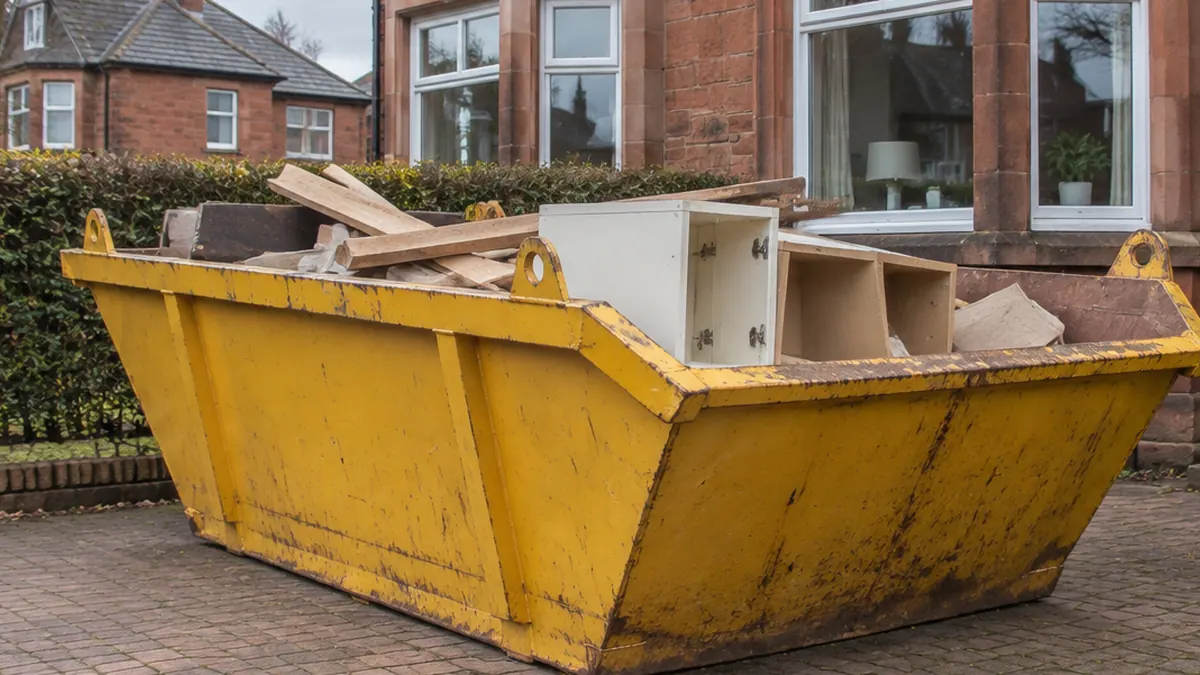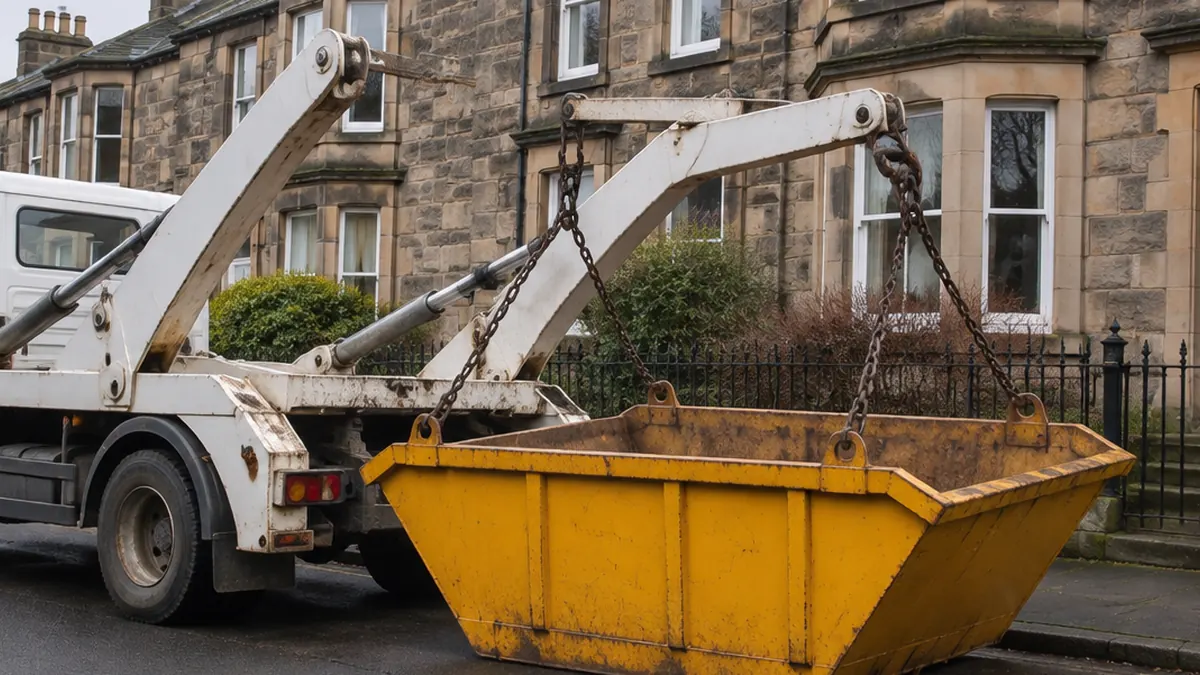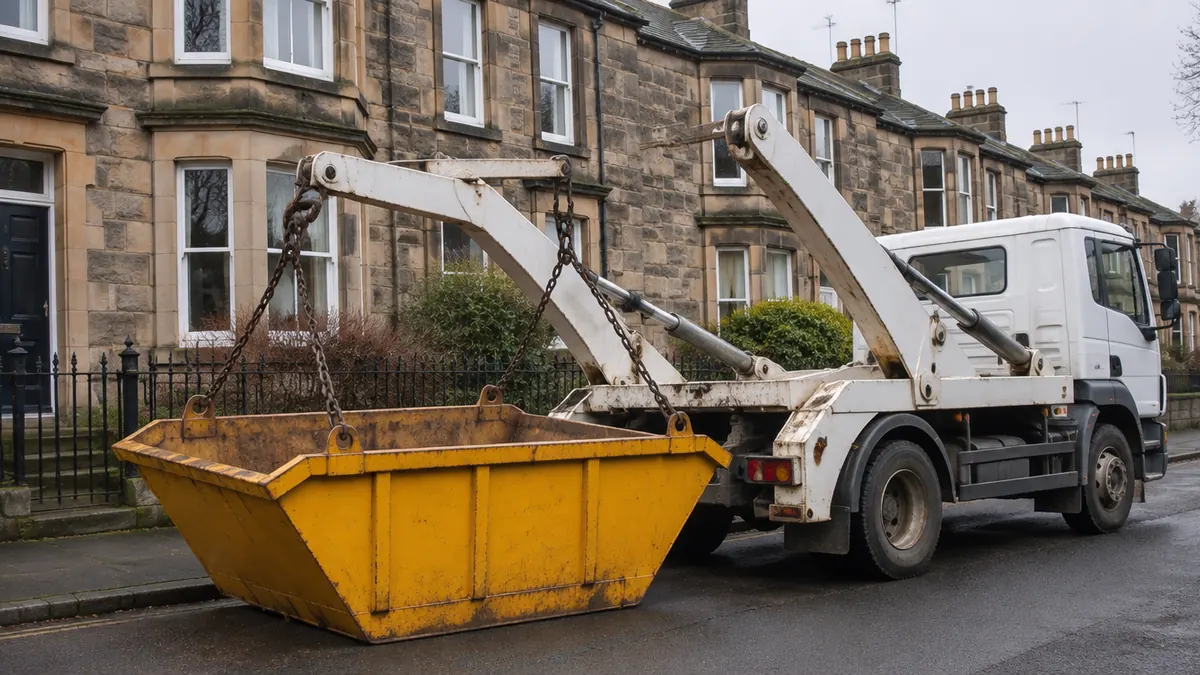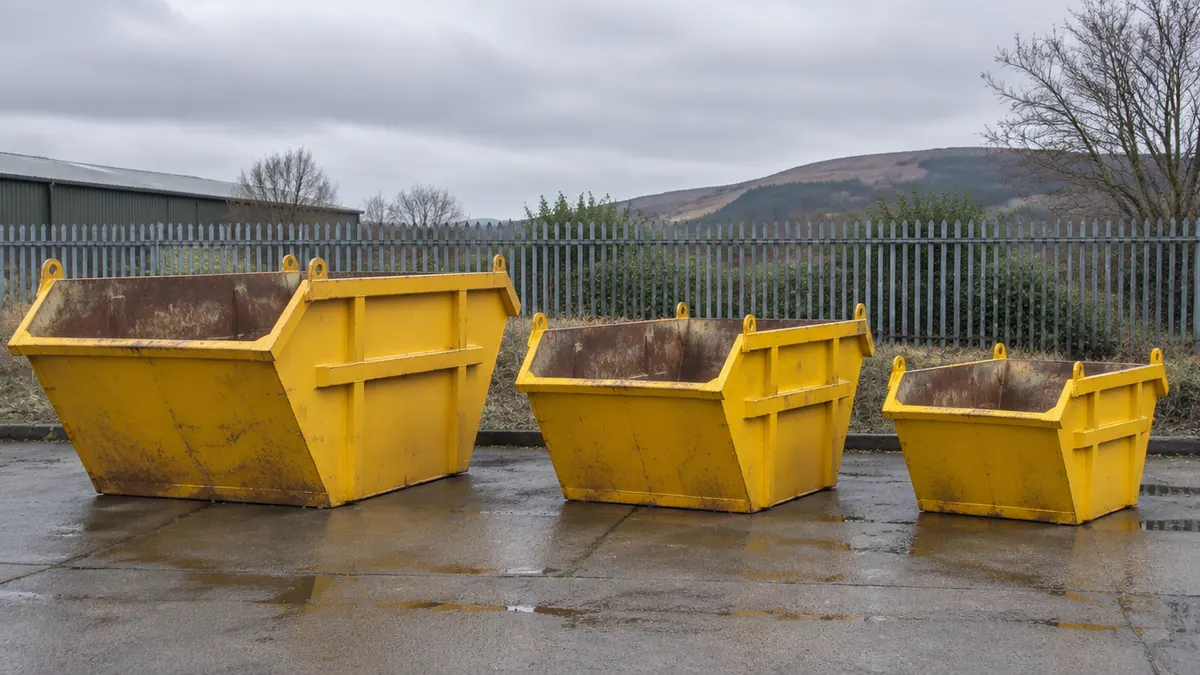
If you have been comparing skip hire prices around Glasgow, you have probably noticed that companies describe their skips in different ways. Some talk about 2 ton, 4 ton and 8 ton skips. Others list 2 yard, 4 yard and 8 yard skips. It is easy to assume these are completely different products, but in most cases they describe the same containers.
Here is what the numbers actually mean and why it matters when you book.
Where the ton names come from
In Scotland, and in the west of Scotland in particular, skips have long been described by tonnage. A small skip became known as a 2 ton skip, a medium skip as a 4 ton skip and a builders skip as an 8 ton skip. You will still see these names on our own price list, because they are what many of our customers know and search for.
The number was originally a rough indication of how much heavy material the skip could take. A 2 ton skip filled with soil or rubble weighs around 2 tonnes, which is where the name comes from.
What cubic yards measure
Cubic yards measure volume, which means how much space is inside the skip. One cubic yard is a cube roughly 3 feet long, 3 feet wide and 3 feet high. A 2 yard skip holds about 2 cubic yards of waste, a 4 yard skip about 4 cubic yards and so on.
Across the UK, cubic yards have become the standard way to describe skips because they tell you how much space you are getting. That is why our range is listed as 2 to 40 cubic yards, with the familiar ton names alongside.
So is an 8 ton skip the same as an 8 yard skip?
In practice, yes. When a Scottish skip company talks about an 8 ton builders skip, it usually means a skip with a capacity of around 8 cubic yards. Our 8 ton builders skip holds 8 cubic yards of waste.
The important point is that the ton name does not guarantee you can put 8 tonnes of material into it. A builders skip filled to the top with soil, concrete or brick could weigh far more than a skip lorry is allowed to lift. Weight limits depend on the vehicle, the material and the skip itself, not on the name printed on a price list.
Why the difference matters
Understanding the two systems helps you avoid two common problems.
- Comparing prices fairly. When you get quotes from different firms, check that you are comparing skips of the same capacity. A cheap 6 yard skip is not a bargain if you actually need 8 yards.
- Avoiding an overweight skip. If your waste is mostly heavy, such as soil, hardcore or rubble, you need to think about weight as well as volume. In many cases a smaller skip filled to the top, or a larger skip only partly filled, is the safe option. Our team will advise you when you book.
Our skip sizes at a glance
- 2 ton or 2 yard mini skip: about 20 to 30 bin bags, ideal for small DIY jobs and garden clearances.
- 4 ton or 4 yard midi skip: popular for domestic jobs and small building work, takes items such as doors and radiators.
- 8 ton or 8 yard builders skip: our most popular skip for builders and larger home projects.
- 12 and 14 yard skips: for larger volumes of lighter, bulky waste.
- 20, 30 and 40 yard roll on roll off skips: for commercial and industrial sites. The 20 yard is suited to heavy materials, the 40 yard to lighter, bulkier loads.
Get the right skip first time
Whatever name you use, our team knows exactly which skip you mean. Tell us what you are getting rid of and we will make sure the skip suits both the volume and the weight of your waste. See our skip hire in Glasgow or contact us for a free quote.
Quick answers
Is a 4 ton skip the same as a 4 yard skip?
Usually, yes. In Scotland a 4 ton skip normally refers to a midi skip with a capacity of around 4 cubic yards.
Can I put 8 tonnes of rubble in an 8 ton skip?
Not necessarily. The ton name is a traditional description, not a weight allowance. Heavy waste can quickly exceed the safe lifting limit, so always check with us first.
Why do skip companies use different names?
Tonnage names are traditional in Scotland, while cubic yards are the UK standard. Many companies, including ours, use both so customers recognise the sizes.