A skip can take most of the waste from a clearance, renovation or building job, but not everything. Some items are hazardous, some need specialist treatment and some are banned from mixed skips by law. Putting them in a skip can lead to extra charges, delays and, in some cases, legal trouble.
Here is the full list of items that should not go in a skip in Scotland, and what to do with them instead.
Hazardous waste
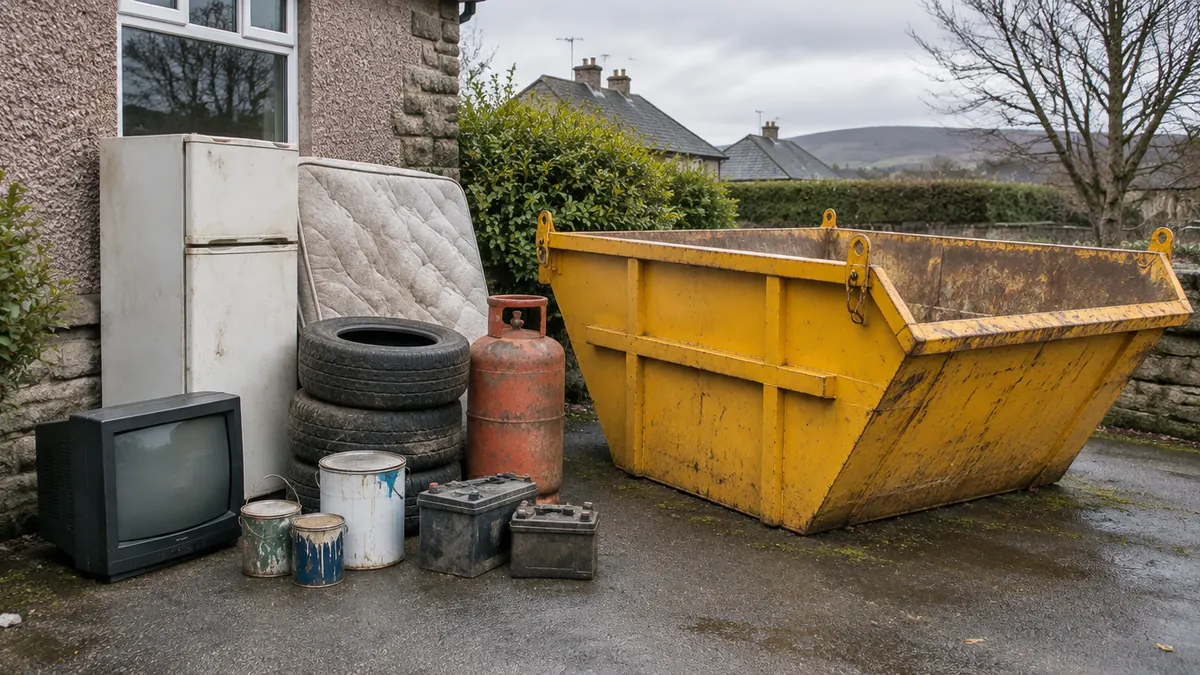
These items are dangerous to people and the environment and must never go in a general skip:
- Asbestos. Any material that may contain asbestos needs specialist removal by a licensed contractor.
- Chemicals and solvents. Including pesticides, weedkillers, cleaning chemicals and pool chemicals.
- Paint. Liquid paint, varnish and similar products. Fully dried out empty tins may be acceptable, so ask us first.
- Oils and fuels. Engine oil, cooking oil, petrol, diesel and paraffin.
- Batteries. Car batteries and household batteries.
- Clinical waste. Needles, syringes and medical waste.
Gas cylinders and pressurised containers
Gas bottles, aerosols and other pressurised containers can explode when compacted or heated. Return gas bottles to the supplier and take aerosols to a recycling centre.
Electrical items
Fridges and freezers contain refrigerant gases that must be safely removed at a specialist facility, so they cannot go in a skip. Televisions, computer monitors, washing machines and other electrical and electronic equipment also need to be recycled separately. Read our guide on mattresses, fridges and televisions for more detail.
Upholstered seating
In Scotland, waste upholstered domestic seating such as sofas, armchairs, sofa beds and upholstered office chairs is treated as containing persistent organic pollutants, known as POPs. These chemicals come from flame retardants used in the past. Under SEPA rules, this seating must be kept separate from general waste and cannot go in a mixed skip. If it is mixed in, the whole load can be affected.
Plasterboard
Plasterboard contains gypsum, which can produce harmful hydrogen sulphide gas when mixed with biodegradable waste in landfill. Plasterboard should be kept separate from other waste. See our guide to plasterboard in skips.
Tyres
Tyres are banned from landfill and need to be recycled separately. Most tyre fitters will take old tyres for a small fee.
Contaminated soil and invasive plants
Soil contaminated with oil or chemicals needs specialist disposal. Invasive plants such as Japanese knotweed must also be handled carefully and should never go in a general skip.
Why the rules matter
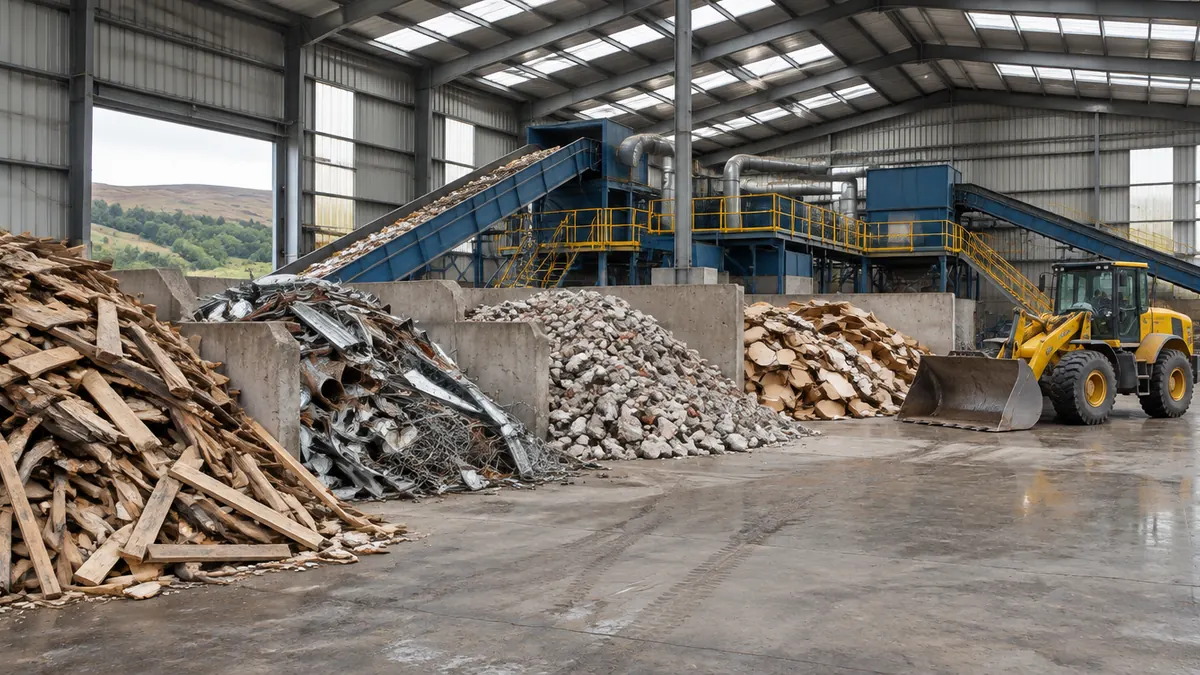
When a skip arrives at our waste transfer recycling facility, the contents are sorted. At least 90 percent of the mixed general waste we collect is recycled. Banned items contaminate the load, make recycling harder and can be dangerous for the people sorting the waste. That is why items found in a skip that should not be there can lead to extra charges.
What can go in a skip?
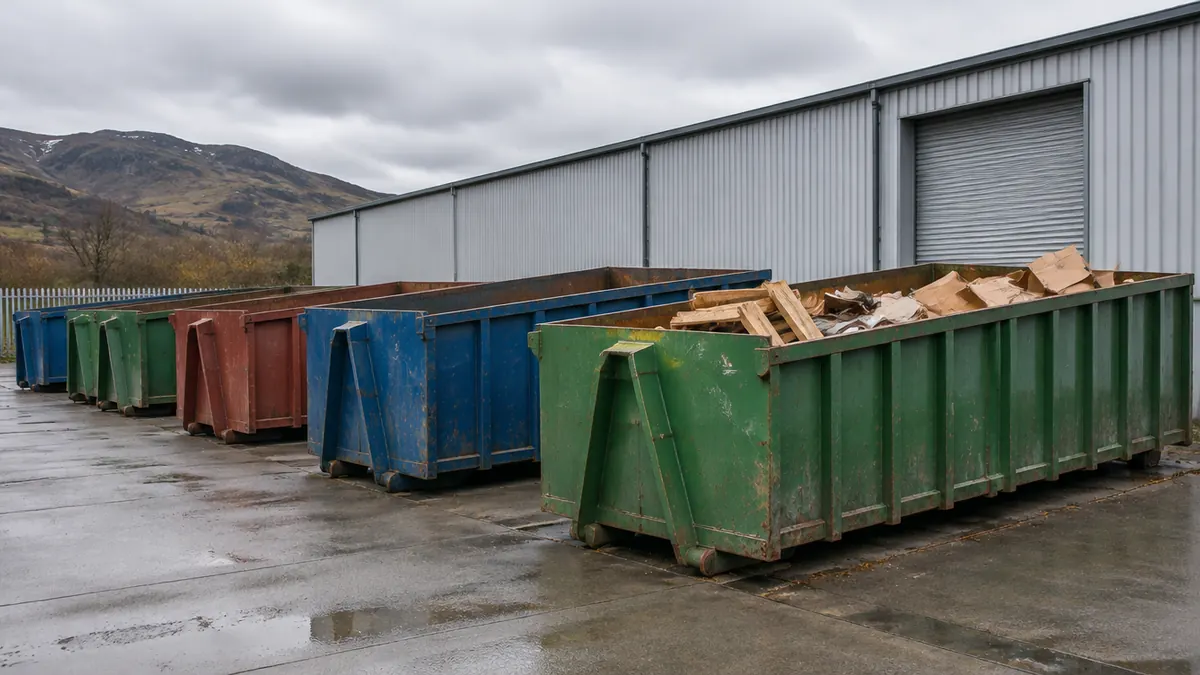
Most everyday waste is fine, including:
- General household waste and bagged rubbish
- Wood, timber and furniture that is not upholstered
- Metal, including radiators and pipework
- Bricks, rubble, concrete and soil, as long as the skip is not overloaded
- Garden waste such as branches, hedge cuttings and grass
- Cardboard, paper and packaging
- Kitchen and bathroom units, tiles and ceramics
If in doubt, ask
If you are unsure about any item, ask us before it goes in. It is always easier to deal with a problem item at the start than to remove it from a full skip later. Our team in Glasgow and Paisley is happy to help. Get a free quote.
Quick answers
Can I put a sofa in a skip in Scotland?
No. Sofas, armchairs and other upholstered domestic seating must be kept separate from general waste under SEPA rules on persistent organic pollutants.
Can paint go in a skip?
Liquid paint cannot go in a skip. Fully dried out empty tins may be acceptable, so check with us first.
Can I put a fridge in a skip?
No. Fridges and freezers contain refrigerant gases and must be recycled at a specialist facility.