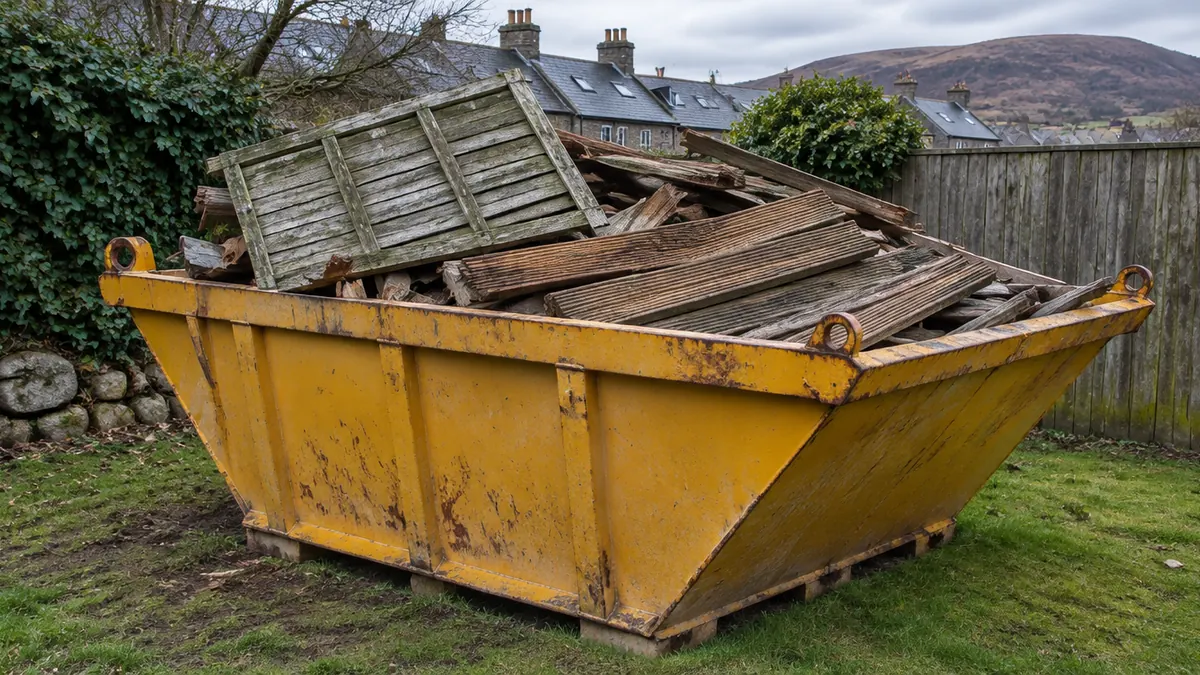
Replacing a fence, lifting old decking or clearing out a pile of timber from the garden is a job that fills a skip quickly. Most garden timber can go in a skip without any problem. However, some types of treated wood are classed as hazardous and need to be handled differently.
Here is what you need to know.
What can go in a skip?
Most timber from domestic gardens and homes can go in a general skip, including:
- Fence panels and gates
- Fence posts and rails
- Decking boards and joists
- Garden sheds and summer houses, once dismantled
- Pallets
- Old furniture made of wood
- Offcuts and building timber
- Doors and skirting boards
Wood is one of the materials we recover at our waste transfer recycling facility, where at least 90 percent of the mixed general waste we collect is recycled.
What about treated timber?
Most fence panels and decking sold for home use have been pressure treated or coated with modern preservatives. In most cases this domestic garden timber can go in a general skip.
However, some older or industrial treatments are a different matter. Wood treated with creosote or with copper chrome arsenate, known as CCA, is classed as hazardous waste. SEPA guidance on waste wood lists items such as railway sleepers, telegraph poles and some agricultural fencing as hazardous, and says these must be kept separate.
Railway sleepers
Old railway sleepers have been popular for raised beds and garden steps for years. Many reclaimed sleepers were treated with creosote. If you are removing old sleepers, do not put them in a general skip. Tell us about them and we will advise on disposal.
How to spot creosote
Creosote treated timber is often dark brown or black, may feel oily or tacky, and usually has a strong tar smell, especially on a warm day. If you are unsure, ask us before it goes in.
Space saving tips
Timber is awkward. Long lengths and panels leave a lot of empty space if they are thrown in randomly.
- Lay fence panels flat along the base of the skip.
- Cut long posts and boards into shorter lengths.
- Stack decking boards rather than throwing them in loose.
- Dismantle sheds into panels before loading.
- Remove nails and screws where possible, or bend them flat for safety.
Concrete posts and bases
Fence replacements often involve concrete posts, gravel boards and concrete bases around posts. These are heavy. A 2 or 4 yard skip filled with concrete can reach its weight limit quickly. Tell us if you have concrete to dispose of so we can recommend the right skip.
What size skip do you need?
- Replacing a few fence panels: a 2 yard mini skip.
- A whole garden fence or small deck: a 4 yard midi skip.
- Large deck, shed and fence together: an 8 yard builders skip.
Stay safe
- Wear gloves. Old timber is full of splinters, nails and screws.
- Wear eye protection when breaking up panels.
- Watch your back when lifting heavy posts and sleepers.
- Do not burn treated timber. Burning treated wood releases harmful chemicals.
Book your skip
We supply skips for garden and fencing jobs across Glasgow, Paisley, Newton Mearns and the surrounding areas. Get a free quote.
Quick answers
Can fence panels go in a skip?
Yes. Most fence panels, posts and gates from domestic gardens can go in a general skip.
Can railway sleepers go in a skip?
Old railway sleepers are often treated with creosote, which is classed as hazardous. They should not go in a general skip.
Can decking go in a skip?
Yes. Domestic decking boards and joists can go in a skip. Cut them down and stack them flat to save space.