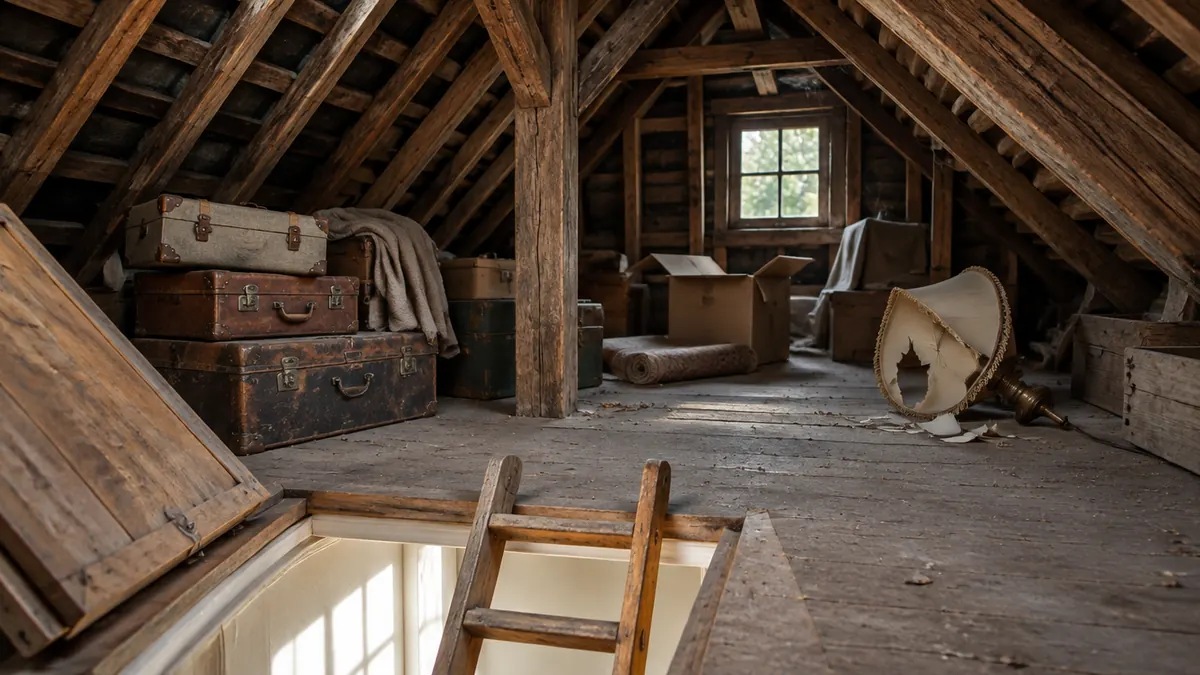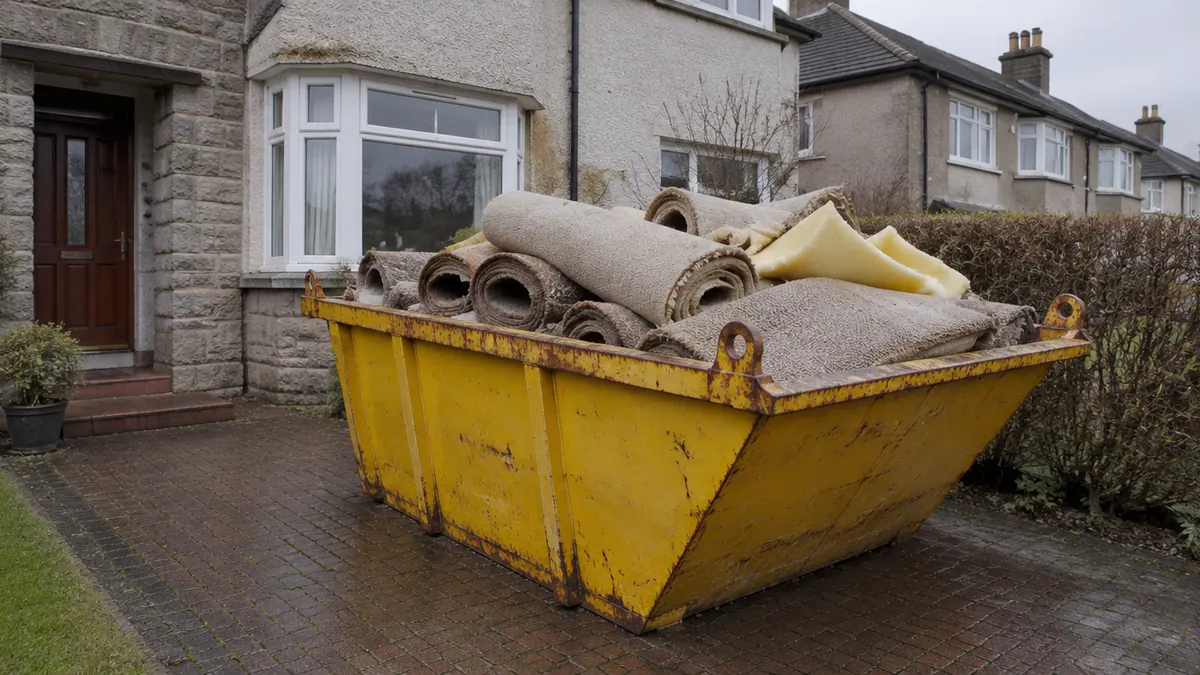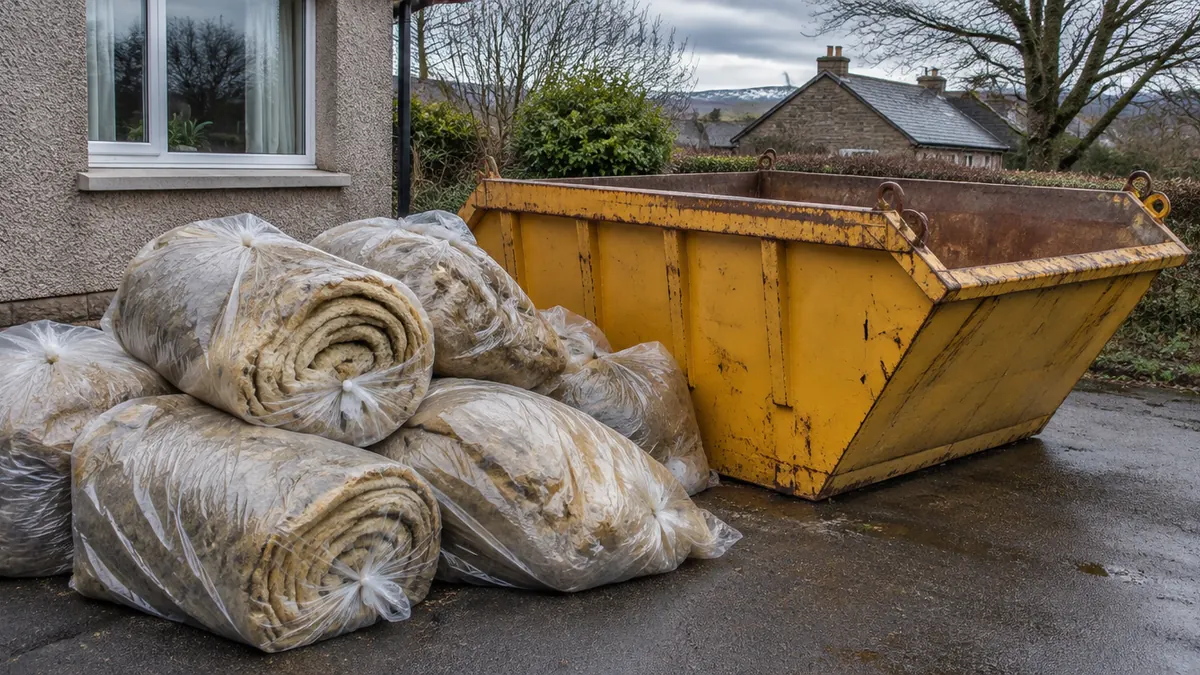
Whether you are converting your loft, replacing old insulation or clearing out the roof space, you will probably end up with a pile of old insulation to get rid of. The answer to whether it can go in a skip depends on what type of insulation it is. Most modern insulation is fine. Some older types need to be handled with real care.
Mineral wool and fibreglass insulation
The most common loft insulation in UK homes is mineral wool, which includes glass wool, often called fibreglass, and rock wool. It usually comes in rolls and is yellow, white, grey or brown.
Mineral wool insulation can usually go in a general skip, as long as it is not contaminated with anything hazardous. To keep things clean and safe:
- Bag it up in heavy duty bags before it goes in the skip. Loose fibres can blow around and irritate skin.
- Compress it as much as possible. Insulation is very light but very bulky.
- Wear gloves, long sleeves and a dust mask when handling it. Glass fibres can irritate skin, eyes and lungs.
Because insulation is so bulky, it can fill a skip faster than you expect. Tell us how much you have when you book so we can recommend the right size.
Rigid foam insulation boards
Rigid insulation boards, such as PIR and polystyrene boards, are common in loft conversions and newer extensions. These can usually go in a general skip in small quantities. For large quantities from a construction project, ask us about the best way to handle them, as keeping them separate can help with recycling.
Vermiculite: handle with care
Some older homes have loose fill insulation called vermiculite. It looks like small, lightweight granules or pebbles and is usually golden brown, silvery grey or a light tan colour. It was often poured between the loft joists rather than laid in rolls.
Some vermiculite insulation, particularly in older properties, may be contaminated with asbestos. If you find loose granular insulation in your loft:
- Do not disturb it. Do not sweep it, scoop it or vacuum it with a household vacuum cleaner.
- Keep people out of the loft until it has been checked.
- Get it tested by a qualified asbestos surveyor or accredited laboratory.
- Use a licensed contractor to remove it if asbestos is found.
Vermiculite that may contain asbestos must never go in a standard skip.
Other asbestos risks in lofts
While you are in the loft, be aware that older properties can contain other materials that may include asbestos, such as old water tanks, pipe lagging, flue pipes and some boards. If anything looks suspicious, leave it alone and get advice.
Insulation and weight
Dry insulation is light. Wet insulation is a different story. If insulation has been soaked by a roof leak, it can be much heavier and may also be mouldy. Bag it carefully and let us know about it.
Replacing insulation?
If you are having new insulation installed, ask your installer whether they will remove and dispose of the old material. Many will, especially if it needs to be removed before new insulation goes in.
What size skip do you need?
- Small amount from a partial top up: a 2 yard mini skip, with the insulation well compressed and bagged.
- Full loft strip: a 4 yard midi skip.
- Loft conversion with other waste: an 8 yard builders skip.
Book your skip
We supply skips for loft work across Glasgow, Erskine, Barrhead and the surrounding areas. Get a free quote.
Quick answers
Can fibreglass insulation go in a skip?
Yes. Mineral wool and fibreglass insulation can usually go in a general skip when bagged and free of contamination.
Is vermiculite insulation dangerous?
Some vermiculite insulation may contain asbestos. Do not disturb it and get it tested before doing anything else.
Can insulation boards go in a skip?
Small quantities of rigid foam insulation board can usually go in a skip. Ask us about large quantities.