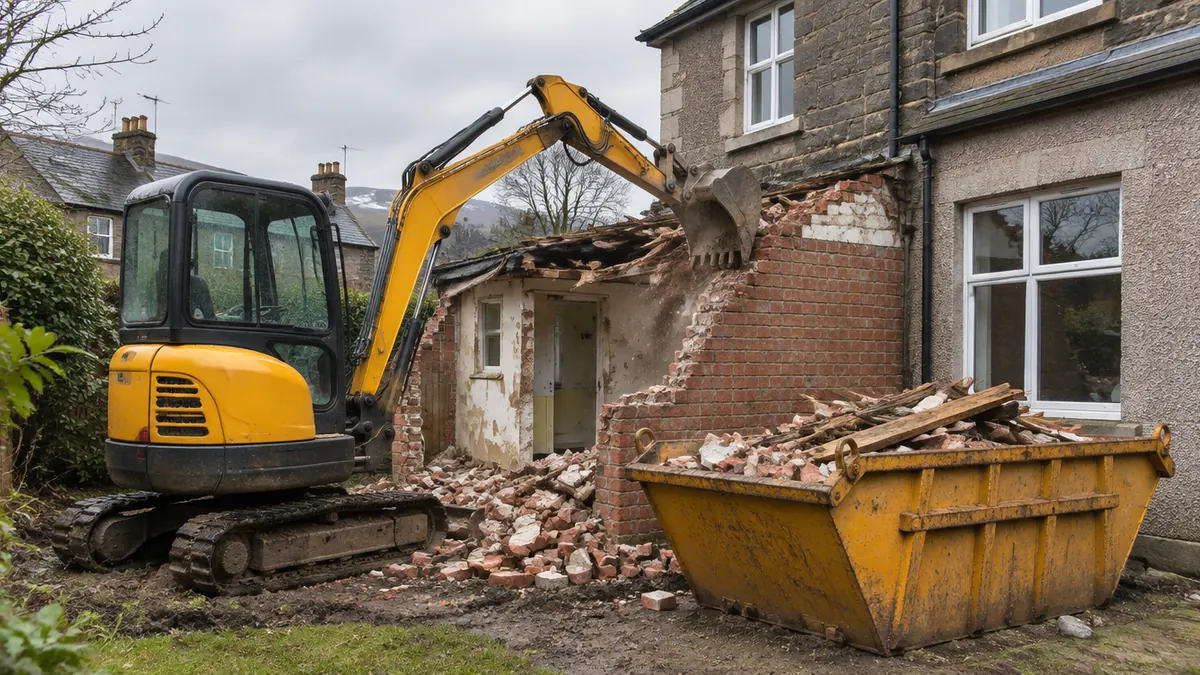
Demolition produces more waste, faster, than almost any other type of building work. Whether you are knocking down a garage, removing an outbuilding, taking out internal walls or clearing a site for a new build, having the right skips in the right place keeps the job safe, tidy and on schedule.
Checks before demolition starts
Building warrant
In Scotland, demolishing a building generally needs a building warrant from the local authority under the Building (Scotland) Act 2003. Check with your council's building standards team before any work starts. Your architect or contractor should be able to advise.
Asbestos
Asbestos was widely used in buildings until it was banned in 1999. Garages, outbuildings and older homes often contain asbestos cement sheets, boards, floor tiles or textured coatings. Under the Control of Asbestos Regulations 2012, anyone carrying out building work that could disturb the fabric of a building has a duty to find out whether asbestos is present first. For demolition, that normally means a refurbishment and demolition asbestos survey. Asbestos cannot go in a standard skip and must be removed by a licensed contractor where required.
Services
Make sure gas, electricity and water supplies are safely disconnected before work begins.
Which skips suit demolition?
Demolition waste is heavy. Brick, block, concrete, stone and rubble reach a skip's weight limit long before it is full.
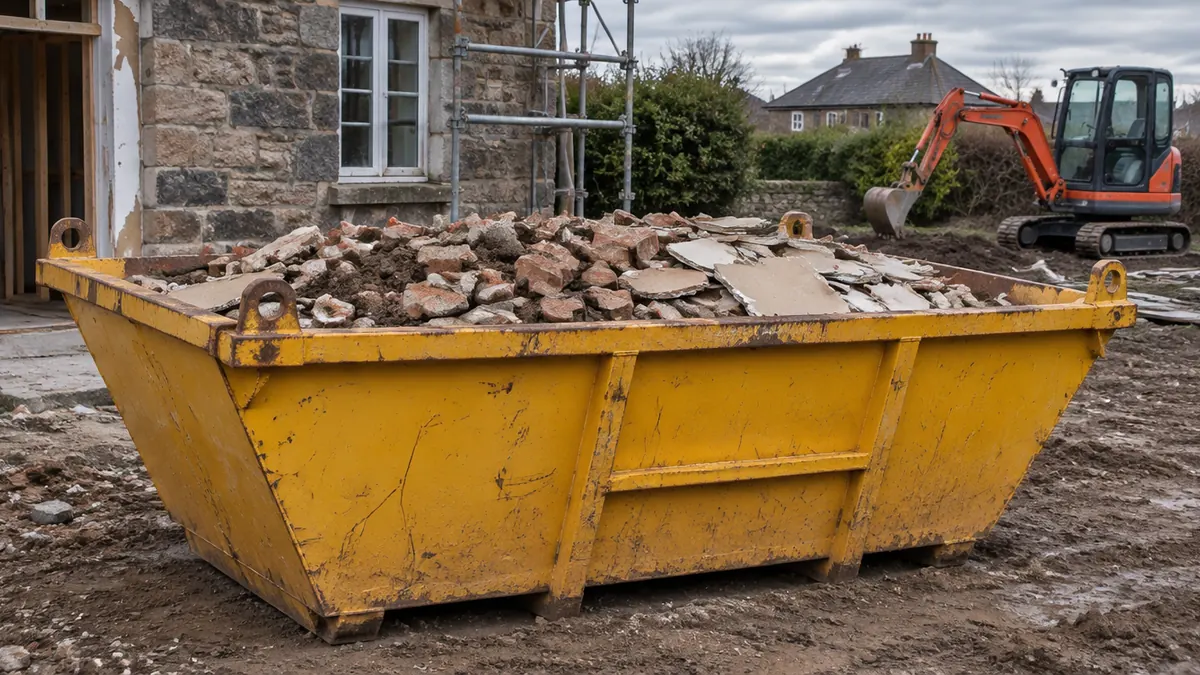
- Small demolition jobs: for a garden wall or small outbuilding, a 4 yard midi skip filled to the top with rubble is often more practical than a larger skip.
- Internal strip outs and medium jobs: an 8 yard builders skip, filled with care. For mostly heavy waste, a safe fill level will be lower than the top.
- Large demolitions: 20 yard roll on roll off skips are suitable for heavy materials such as soil and brick, and they save on transport compared with repeated builders skip swaps.
- Light demolition waste: timber, roofing felt and packaging may suit a 40 yard roll on roll off skip.
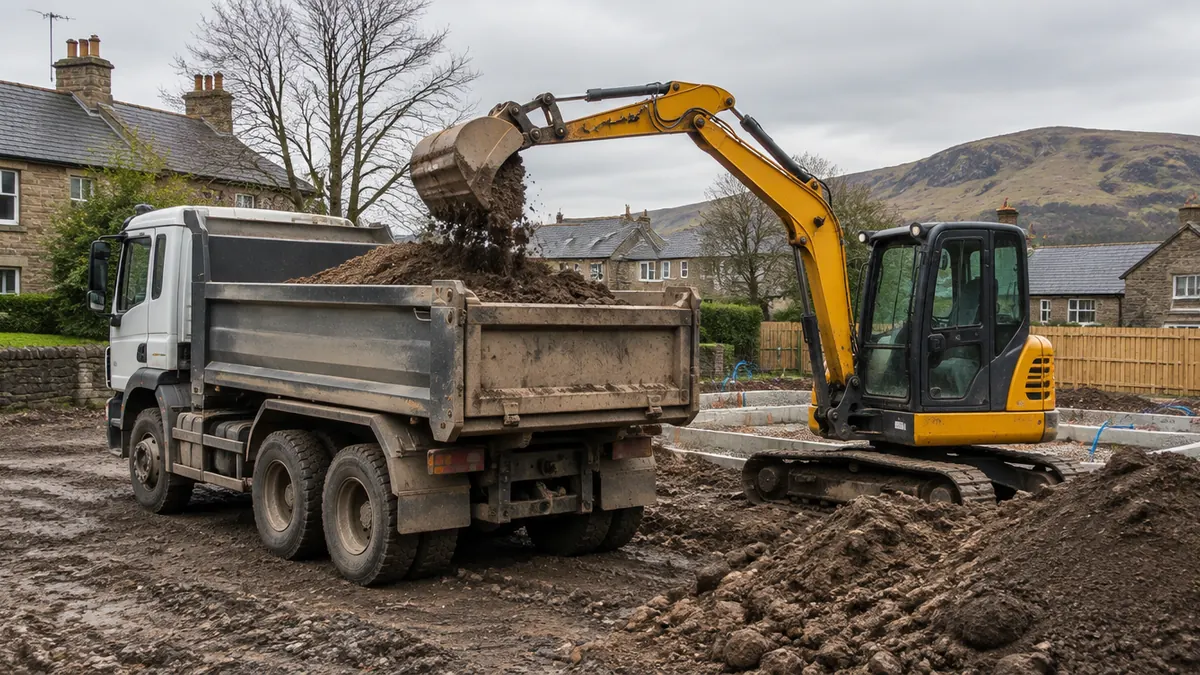
- Tipper hire: for large volumes of hardcore and soil, our modern tipper wagons can be quicker and more cost effective.
Separate your waste to save money
The biggest saving on a demolition job usually comes from separating materials on site.
- Inert waste, such as brick, concrete, stone and clean soil, can often be crushed and reused as aggregate.
- Metal, such as steel beams, pipes and reinforcement, has scrap value.
- Timber can be recycled.
- Mixed general waste is the most expensive to process.
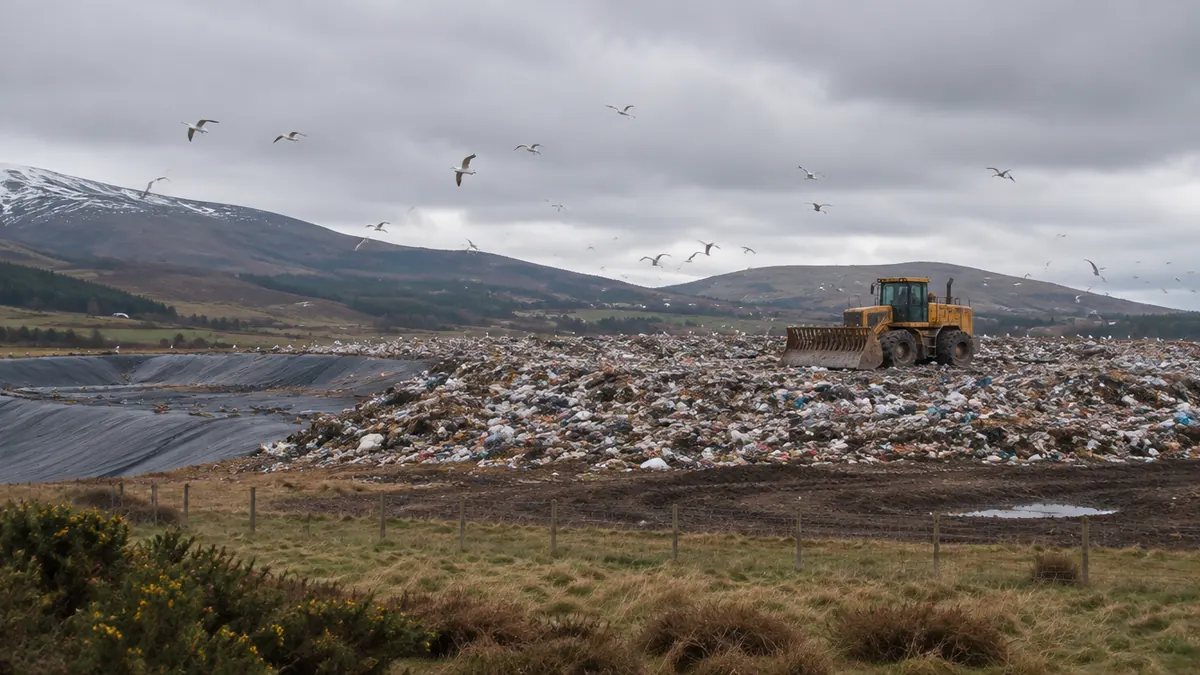
In Scotland, waste sent to landfill is taxed. From 1 April 2026, Revenue Scotland charges £130.75 per tonne at the standard rate and £8.65 per tonne at the lower rate, which applies to qualifying inert material. Keeping waste clean and separate improves recycling and helps control costs.
Safety on a demolition site
- Position skips away from the demolition zone so falling debris cannot hit them or the people loading them.
- Keep access clear for the skip lorry.
- Do not overload skips. Heavy loads must stay below the top edge and within the safe weight.
- Control dust. Damping down helps, but avoid soaking rubble in the skip, as water adds weight.
- Never put asbestos, hazardous waste or gas cylinders in the skip.
Recycling reports for contractors
At least 90 percent of the mixed general waste we collect is recycled at our waste transfer recycling facility. For contractors, our daily and monthly recycling reports show the weight of each skip and how much was recycled, which is useful for site waste records and client reporting.
Talk to us about your project
Since 1989 we have supplied skips and tipper hire for demolition and construction projects across Glasgow, Paisley, Hillington and the surrounding areas. Get a free quote.
Quick answers
Do I need permission to demolish a building in Scotland?
Demolition generally needs a building warrant from the local authority. Check with your council's building standards team before work starts.
What is the best skip for demolition rubble?
A smaller skip filled to the top, a 20 yard roll on roll off skip for large jobs, or tipper hire for big volumes of hardcore.
Can asbestos go in a skip?
No. Asbestos needs specialist handling and must never go in a standard skip.