Bathrooms are usually the smallest room in the house, but a bathroom renovation can produce a surprising amount of waste. Tiles, plaster, an old bath, a toilet and a basin all add up, and much of it is heavy. Choosing the right skip means thinking about weight as much as space.
What waste does a bathroom renovation produce?
A typical bathroom refit produces:
- A bath or shower tray, and possibly a shower enclosure
- A toilet and basin
- Wall and floor tiles, often with adhesive still attached
- Plaster, plasterboard or tile backer board
- Flooring and underlay
- Pipework, taps and fittings
- Boxing, panels and timber
Ceramic tiles, plaster and sanitaryware are dense, so a bathroom skip can reach its weight limit before it looks full.
Which skip size suits a bathroom?
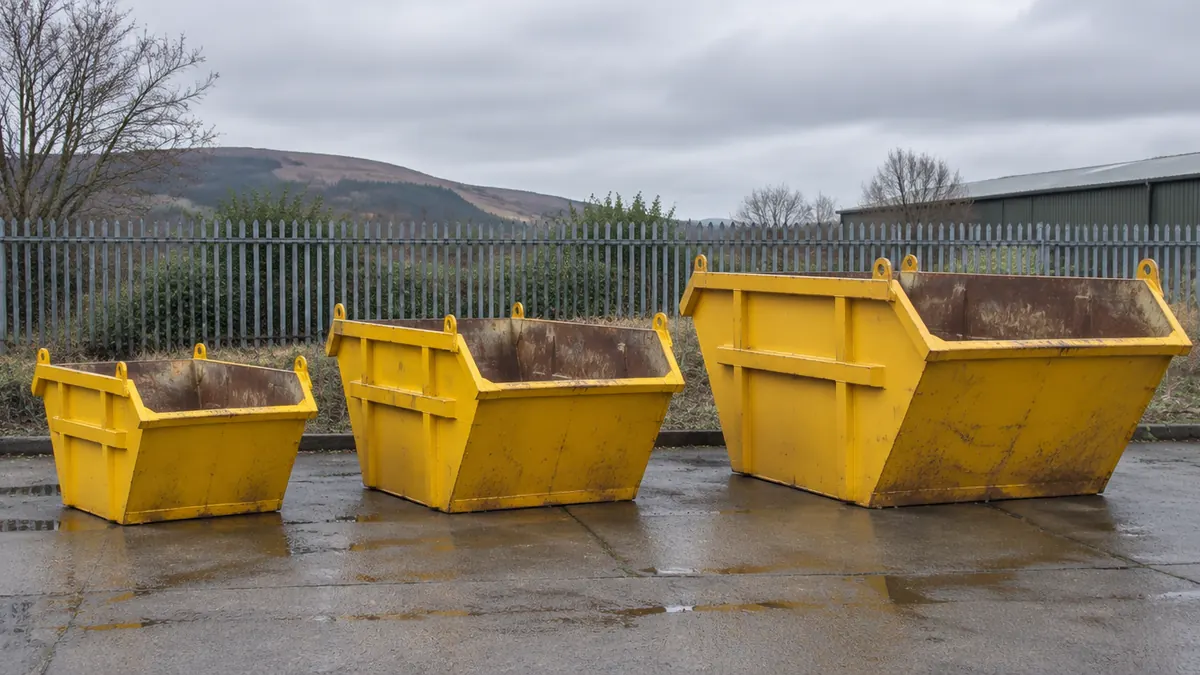
Most bathroom refits: 4 yard midi skip
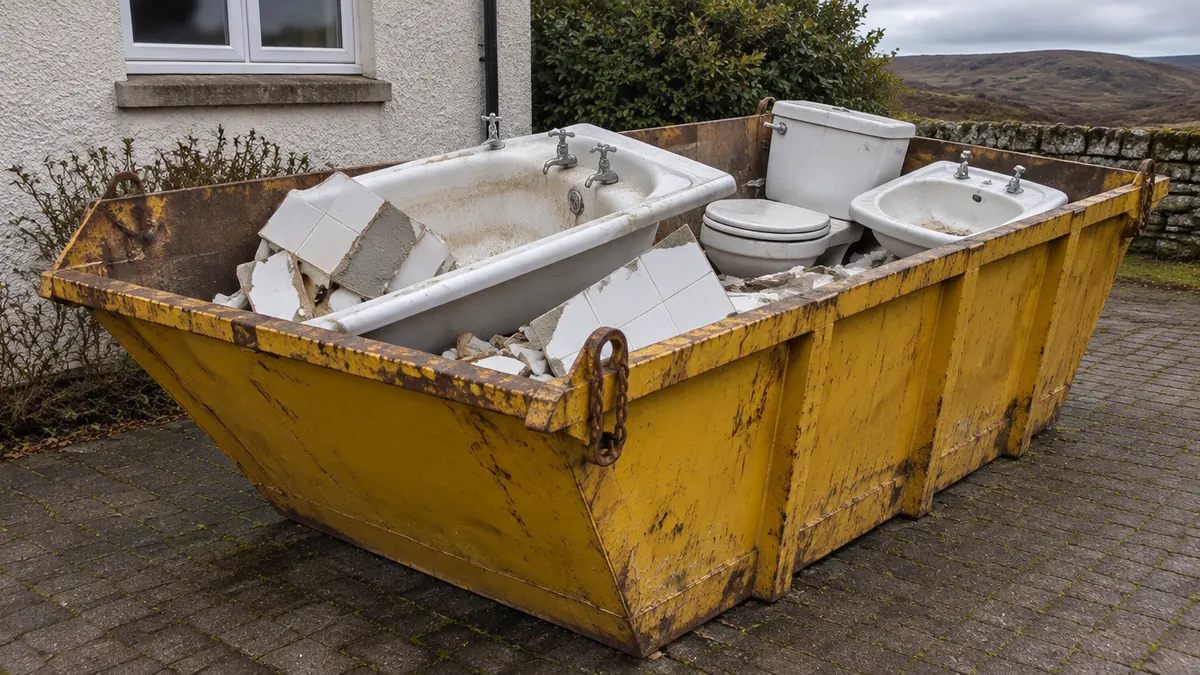
For a standard bathroom refit, a 4 yard midi skip is usually the right choice. It takes the bath, toilet and basin along with the tiles and other waste. Midi skips are mainly used for domestic jobs and small building work, and they hold bulky items such as doors and radiators.
Large bathroom or extra work: 8 yard builders skip
If you are also moving walls, replacing floor joists, refitting an en suite at the same time, or the bathroom is particularly large, an 8 yard builders skip gives you more room. Keep an eye on the weight if most of your waste is tiles and plaster.
Small cloakroom or partial refit: 2 yard mini skip
If you are only replacing a toilet and basin in a cloakroom, a 2 yard mini skip may be enough.
Watch the weight
Tiles and plaster are heavy. If you fill a large skip to the top with tiles and rubble, it may be too heavy to lift safely. For bathroom waste, it is often better to fill a smaller skip to the top than to half fill a larger one with heavy material. Ask us about the safe fill level when you book.
Cast iron baths
Older Glasgow properties often have cast iron baths. These are extremely heavy and can weigh well over 100 kilograms. A cast iron bath can go in a skip, but it takes up weight allowance, so mention it when you book. Cast iron also has scrap value, so you might choose to keep it out of the skip and have it collected for scrap.
What cannot go in the skip
- Plasterboard. Keep it separate from general waste.
- Electrical items. Extractor fans, electric showers and heated towel rails with electrical parts should be recycled separately.
- Chemicals and sealants. Leftover tile adhesive, grout and cleaning chemicals in liquid form.
- Asbestos. Older bathrooms sometimes have textured ceilings, boxing or panels that may contain asbestos. If your property was built or altered before 2000, get suspicious materials checked before you start.
Tips for loading a bathroom skip
- Put the bath in first, flat on the base of the skip, then fill around and inside it.
- Break up tiles and plaster and spread them evenly.
- Bag small debris so it is easy to load and does not blow around.
- Keep the load below the top edge of the skip.
- Fill gaps with pipework, timber and smaller items.
Bathrooms in tenement flats
Many Glasgow bathrooms are in upper floor tenement flats, which means carrying waste down several flights of stairs. Plan where the skip will go before work starts. If there is no driveway and you do not have a road permit in place, our wait and load service lets you fill the skip while the driver waits.
Book your bathroom skip
We supply skips for bathroom renovations across Glasgow, Renfrew, Barrhead and the surrounding areas. Get a free quote.
Quick answers
What size skip do I need for a bathroom?
A 4 yard midi skip suits most bathroom refits. A larger bathroom or extra work may need an 8 yard builders skip.
Can a bath go in a skip?
Yes. Acrylic and steel baths are straightforward. Cast iron baths are very heavy, so mention them when you book.
Can bathroom tiles go in a skip?
Yes. Tiles can go in a skip, but they are heavy, so watch the weight and spread them evenly.