Office moves, refurbishments and closures generate a lot of waste in a short space of time. Desks, chairs, partitions, filing cabinets, IT equipment and years of paperwork all need to go somewhere. Some of it can go in a skip. Some of it must be handled very differently.
Here is how to plan an office clearance in Glasgow.
Plan ahead
Office clearances usually happen against a deadline, such as the end of a lease or the start of a refit. Plan the waste side early:
- Audit what you have. Walk the office and list the furniture, equipment and storage.
- Decide what is moving. Separate items going to the new office from everything else.
- Identify items for reuse. Office furniture in good condition can often be sold or donated.
- Arrange separate routes for IT equipment and confidential paperwork.
- Book skips for what is left.
What can go in a skip?
Most office fixtures and furniture can go in a skip, including:
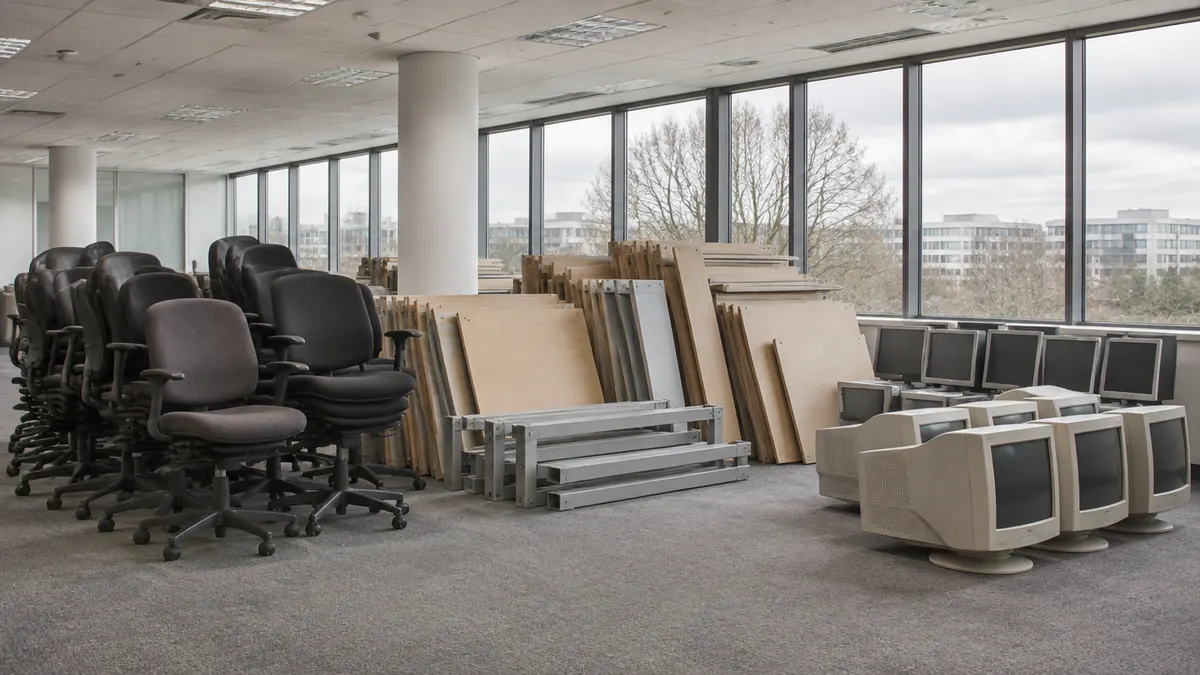
- Desks, tables and shelving
- Metal filing cabinets, once emptied
- Partition walls and ceiling tiles, as long as they do not contain asbestos
- Carpet tiles and flooring
- Packaging, cardboard and general office waste
- Kitchen units from staff areas
What cannot go in a skip?
Upholstered office chairs
Under SEPA rules, waste upholstered seating, including padded office chairs, must be kept separate from general waste because of persistent organic pollutants. Office chairs in good condition can often be resold or donated.
IT and electrical equipment
Computers, monitors, printers, phones, servers and kitchen appliances are electrical waste and need to be recycled separately. Before any device leaves your business, make sure data is securely wiped or the storage is destroyed. Many specialist IT recyclers offer certified data destruction.
Confidential paperwork
This is one of the biggest risks in any office clearance. Under UK GDPR and the Data Protection Act 2018, organisations must dispose of personal data securely. Documents containing customer details, staff records, financial information or anything else confidential should never go in a skip. Use a confidential shredding service that provides a certificate of destruction.
Hazardous items
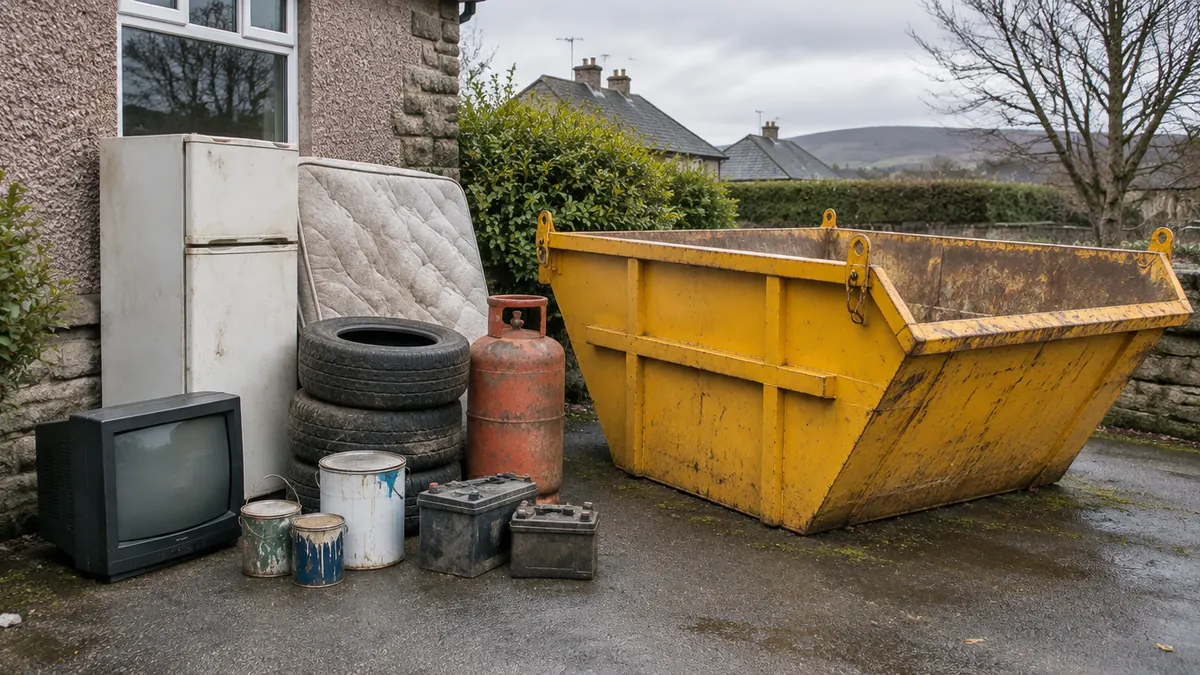
Fluorescent tubes, batteries, toner cartridges and cleaning chemicals need specialist disposal.
Which skip size?
- Small office or partial clearance: an 8 yard builders skip.
- Larger office or full strip out: 12 or 14 yard skips suit bulky, light office waste.
- Large commercial premises: a 30 or 40 yard roll on roll off skip, which is ideal for high volumes of lighter, bulkier materials.
Enclosed and lockable skips are useful where a skip will sit in a shared car park or where you want to keep the contents secure.
Placement and access
Many Glasgow offices are in the city centre, where space is tight. If a skip needs to go on a public road, a council permit is required. Glasgow City Council's city centre skip permit for 2026/27 is £92 for the first week, and applications should be made at least 28 working days in advance. If the building has a car park or yard, placing the skip there avoids the permit.
Recycling and reporting
At least 90 percent of the mixed general waste we collect is recycled. For businesses, we provide daily and monthly recycling reports showing the weight of each skip and the percentage recycled. These reports can support your environmental reporting and show clients and landlords that the clearance was handled responsibly.
Duty of care
As a business, you must keep a waste transfer note for every transfer of waste and use an authorised waste carrier. We provide the paperwork you need.
Book your office clearance skips
We supply skips for office clearances across Glasgow, Hillington, Paisley and the surrounding areas. Get a free quote.
Quick answers
Can office chairs go in a skip?
Padded or upholstered office chairs cannot go in a mixed skip under SEPA rules. They must be kept separate.
Can I put old files in a skip?
No. Paperwork with personal or confidential information should be securely shredded, not put in a skip.
Can computers go in a skip?
No. IT equipment is electrical waste and should be recycled separately after data has been securely wiped.