Winter in Glasgow and the west of Scotland brings plenty of rain, the occasional heavy snowfall, icy mornings and very short days. None of that has to stop your project, but it does change how you should plan and manage your skip. Here are our tips for hiring a skip in winter.
Rain adds weight
Rain is the biggest winter issue for skips. Water soaks into many types of waste and can add a lot of weight without you noticing:
- Cardboard and paper absorb water and become heavy and soggy.
- Soil and rubble get much heavier when wet. Glasgow's clay soils hold water well.
- Carpet, underlay and insulation act like sponges.
- Timber absorbs water over time.
Water can also pool in the bottom of an open skip. A skip that would have been within its weight limit when dry may become too heavy to lift safely after a week of rain.
How to manage rain
- Cover the skip with a tarpaulin when you are not loading it. Weigh down or tie the edges so it does not blow away.
- Bag absorbent waste such as cardboard and insulation before it goes in.
- Fill the skip quickly and book collection as soon as it is full.
- Keep heavy waste low in the skip and think about a smaller skip for soil and rubble.
Snow and ice
Before delivery
If snow or ice is forecast, clear the delivery area and the route to it. Grit or salt your driveway so the lorry and driver can work safely. A skip lorry on an icy slope is a real hazard.
During the hire
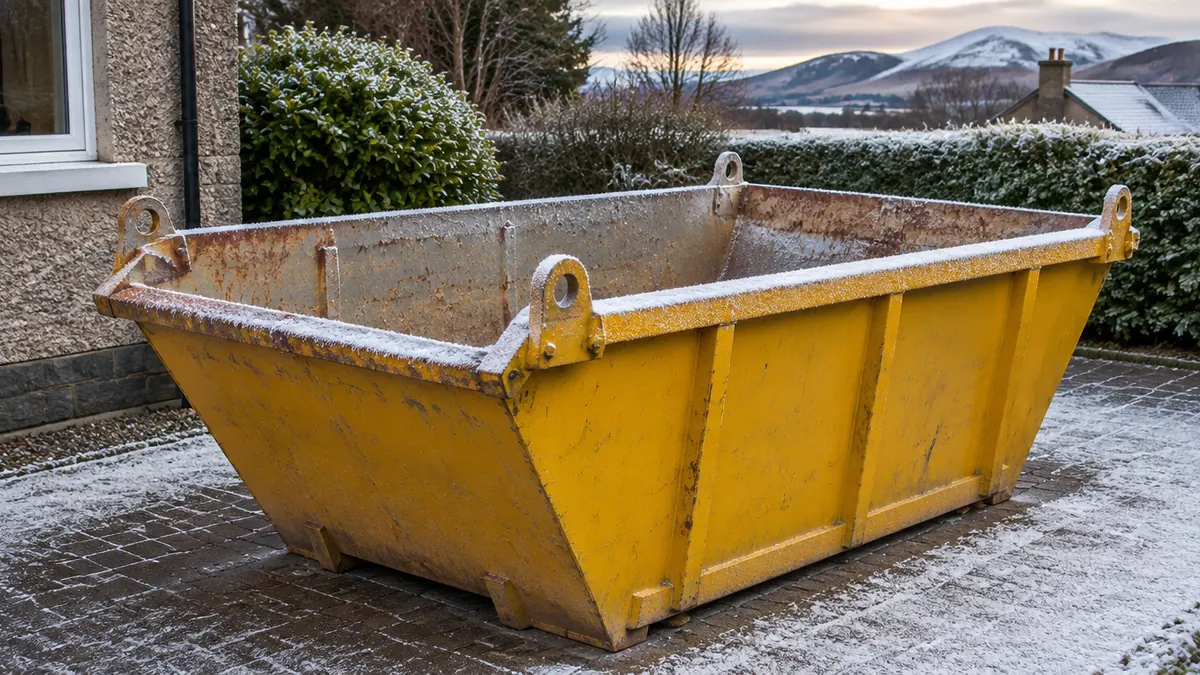
Snow can build up inside an open skip and add weight. A tarpaulin helps. Do not climb into the skip to clear snow or compact waste, as icy steel surfaces are extremely slippery.
Before collection
Clear snow and ice from around the skip and from the driveway so the driver can reach it safely. If conditions are severe, there may be delays to deliveries and collections for safety reasons. We will keep you informed.
Short days and dark nights
In the middle of a Scottish winter, it can be dark by late afternoon. That affects skips in two ways:
- Visibility on the road. If your skip is on a public road, it must be visible to drivers. Councils can require lighting and guarding as part of the permit, and the reflective markings on the skip must not be covered. Check that any lights are working each evening.
- Safe loading. Avoid loading the skip in the dark. Trips, falls and injuries from sharp objects are more likely when you cannot see properly.
Wind
Winter storms can pick up loose, light waste such as packaging, plastic and insulation and scatter it across the street. Bag light waste, keep the load level and cover the skip during high winds.
Protect your driveway
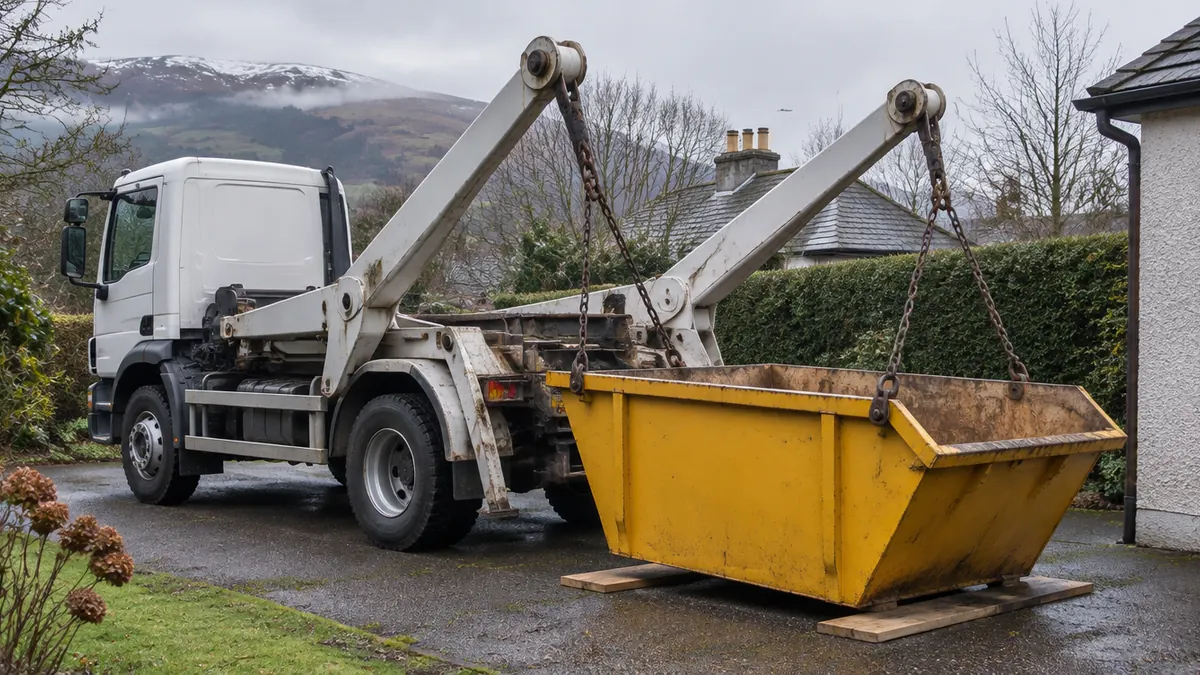
Frost can make some driveway surfaces more brittle, and wet ground is softer. Lay scaffold boards or thick plywood sheets under the skip to spread the weight, especially on block paving and gravel.
Winter is a good time for some jobs
Winter is not all bad for skip hire. It is a great time for indoor projects such as kitchen and bathroom refits, loft clearances and decluttering. Garden jobs such as cutting back shrubs and trees are also often done in the dormant season, and storm damage to fences and sheds often needs clearing.
Book your winter skip
We supply skips all year round across Glasgow, Paisley, Erskine and the surrounding areas. Our enclosed and lockable skips are also useful in winter for keeping waste dry. Get a free quote.
Quick answers
Does rain make a skip heavier?
Yes. Cardboard, soil, carpet and timber absorb water, and water can pool in the skip, adding weight.
Should I cover my skip in winter?
Yes. A tarpaulin secured at the edges keeps out rain and snow and stops light waste blowing away.
Can skips be delivered in snow?
Usually, as long as access is safe. Clear and grit the area first. Severe conditions may cause delays for safety reasons.